© 2026 InterSystems Corporation. All rights reserved.Privacy & TermsGuaranteeSection 508Contest Terms


ClaimAuditAi 

Community Project
This project is maintained by its author and is not officially supported by InterSystems. For technical support, please contact the project developer.
This project is maintained by its author and is not officially supported by InterSystems. For technical support, please contact the project developer.
0
0 reviews
0
Awards
133
Views
0
IPM installs
 0
0 Add to bundle
Details
Releases (8)
Reviews
Issues
Videos (2)
Articles (2)

ClaimAuditAI is a state-of-the-art payment integrity application designed to intercept and audit medical claims in real time (pre-payment) rather than relying on retroactive "pay-and-chase" audits. It runs natively on the InterSystems IRIS for Health platform, combining the robust transactional capabilities of the IRIS FHIR Server.
What's new in this version
Version: 2.3.0 — 22 Jun, 2026
Production Security Hardening, Concurrency Safety & Event Loop Stability (v2.3.0)
This release focuses on production-grade security, database concurrency, and runtime stability. We've replaced legacy HMAC authentication with PBKDF2, secured unauthenticated endpoints, eliminated event loop crashes under load, bounded memory growth, and added queue-level locking to prevent concurrent processing collisions.
🔐 1. Security & Auth Hardening
Documentation: Security Overview Wiki · IRIS RBAC Wiki · README.md Security Section
Implementation: Router.cls · Debug.cls · auth_utils.py
PBKDF2-SHA256 Password Hashing with Auto-Upgrade
- Replaced legacy HMAC-SHA256 static-salt hashes with PBKDF2-SHA256 (100,000 iterations, random 16-byte salt)
- Automatic on-the-fly migration: legacy HMAC hashes are detected by their prefix and upgraded to PBKDF2 on the next successful login — zero-touch transition
- Timing-safe comparison via
hmac.compare_digest()prevents side-channel attacks
Revoked Superuser from UnknownUser
- Removed the
%Allsuperuser role from the CSP Gateway'sUnknownUseraccount - Replaced with fine-grained roles:
%DB_INTEROP-CODE,%DB_INTEROP-DATA,%HS_DB_INTEROP,%DB_INTEROPX0001R,%DB_INTEROPX0001V,%HS_ServiceRole,%HS_Administrator - Explicit schema-level SQL grants (
SELECT, INSERT, UPDATE, DELETE) onHSFHIR_X0001_S,HSFHIR_X0001_R,HSFHIR_X0001_V, andClaimAuditschemas - Web app
MatchRolesupdated to include%DB_INTEROPX0001R:%DB_INTEROPX0001V
Secured Token Introspection (/auth/introspect)
- Now requires either Bearer JWT token or Basic Authentication credentials
- Unauthenticated requests return
401 {"active": false, "error": "Unauthorized"}
Admin-Gated LLM Settings
- Both
GET /settings/llmandPOST /settings/llmenforceAdminrole check viaRequireAuth("Admin")
⚡ 2. Python Backend Stability
Documentation: LLM Router Architecture Wiki · Orchestration - AI Hub Wiki
Implementation: agent_orchestrator.py · llm_router.py
Event Loop Lifecycle Fix
- Replaced custom
asyncioevent loop management inside multi-threaded Embedded Python contexts with cleanasyncio.run()invocations - Eliminates
RuntimeError: This event loop is already runningcrashes under concurrent load
Bounded LRU LLM Response Cache
- Replaced the unbounded in-memory cache dictionary with a bounded
OrderedDictLRU cache (max 500 entries) - LRU eviction: oldest entry popped when limit exceeded; cache hits move entry to end for recency preservation
- Prevents unbounded memory growth under sustained production load
🗄️ 3. Database & Queue Concurrency Safety
Documentation: Data Classes Wiki · README.md Queue Section
Implementation: Queue.cls · Engine.cls
Atomic Queue Operations
Enqueue()wrapped inTSTART/TCOMMITwith node-level locks (^ClaimAuditAI("QueueLock", claimResponseId), 10s timeout) preventing concurrent insertsWorkerLoop()wrapped in atomic transactions — failed adjudication triggersTROLLBACK, reverting status changes- Process-level lock (
^ClaimAuditAI("QueueProcessLock"), 5s timeout) prevents multiple workers from processing the same queue item concurrently
Dead Letter Queue Enhancements
- Items with exhausted retries (default 3) automatically move to
dead-letterstatus - New
MoveToDeadLetter(),RequeueFromDeadLetter()methods onQueue.cls - New API routes:
GET /system/dead-letter-queue,POST /system/dead-letter-queue/:id/requeue
Stats Cache
- After successful adjudication, aggregated statistics are written to
^ClaimAuditAI("Stats")for O(1) dashboard reads - Eliminates the N+1 FHIR GET pattern on every dashboard load
Iteration & Seeding Reliability
LoadSampleData()usesHS.FHIRServer.API.InteractionsStrategy.Delete()instead of raw SQLDELETEstatements, wrapped inTSTART/TCOMMITClearAllData()uses the same strategy-based deletion for consistency- Iteration properties use direct
.propertyNameaccess instead of.%Get("propertyName")for cleaner code
🖥️ 4. UI/Frontend Role Constraints
Documentation: UI Architecture Overview Wiki
Implementation: LLMSettings.tsx
Role-Gated LLM Settings View
- Integrates
useRoleStore+PERMISSIONSfrom the frontend role checking system - Non-Admin users see an "Access Restricted" placeholder view instead of the LLM configuration form
- Backend
RequireAuth("Admin")on both GET and POST provides defense-in-depth
🧪 5. Test Suite Expansion
Documentation: Testing Overview Wiki · README.md Testing Section
Implementation: test_auth_utils.py · test_tier_orchestrator.py
- 108 total tests (up from 101) — all passing in 1m 13s
- NEW
test_auth_utils.py: 100% coverage for PBKDF2 hashing, timing-safe verification, legacy HMAC detection, and auto-upgrade triggers - NEW
test_tier_orchestrator.py: Unit tests for parallel tier execution underThreadPoolExecutor, configurable per-tier timeouts, and circuit breaker open/close state transitions - Frontend: 18/18 Vitest tests passing
- E2E: 11/11 integration stages passing (seeding, adjudication, queue, escalation, approval, collusion, health, backup)
📦 6. DevOps & Dependencies
Implementation: requirements.txt · Dockerfile
- Pinned
httpx==0.28.1andmcp==1.27.2in requirements.txt for reproducible builds - CSP process cache flush commands registered to ensure live REST dispatch classes compile and reload cleanly
Full Changelog: c28e8aa...6eef7be
ClaimAuditAI
An autonomous, pre-payment payment integrity agent running natively on InterSystems IRIS for Health. ClaimAuditAI intercepts FHIR Claim submissions in the request lifecycle, analyzes them through a three-tier AI reasoning engine, and holds suspicious transactions for human review.
Author: Mainza Kangombe — LinkedIn

🎥 Product Videos
Learn more about the business motivation and technical architecture of ClaimAuditAI:
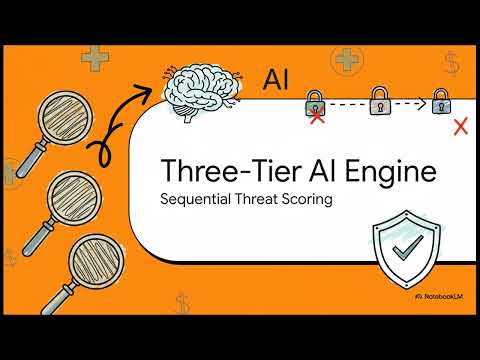

- ClaimAuditAI - Video Explainer: A high-level overview of healthcare payment integrity challenges and how ClaimAuditAI intercepts anomalous claims.
- ClaimAuditAI - Video Walkthrough Demo: A detailed developer walkthrough covering FHIR endpoints, the 3-Tier AI Engine, Cytoscape network graphs, and role-based access.
🌟 Key Capabilities

- Real-Time FHIR Interception: Claims are audited, pended, and held at the database/middleware layer before persistence, fully supporting both single Claims and batch/transaction Bundles.
- Asynchronous Background Processing Queue: Defer slow AI pipelines (such as LLM generation and vector lookups) to an asynchronous database queue (
ClaimAudit.Data.Queue) with atomicTSTART/TCOMMITwrappers and node-level locks to prevent concurrent processing. Returns a fast202 Acceptedto clients in milliseconds, while a background worker process runs the full FSM. Failed items are automatically moved to a dead letter queue after exhausting retries (default: 3), with a dedicated API for inspection and requeueing. - Three-Tier AI Engine: Runs HNSW clinical note NLP vector search, PyTorch reconstruction loss anomaly profiling, and NetworkX collusion cycle graph analysis sequentially under strict timeout and circuit-breaker safeguards. The circuit breaker (default: 3 failures → 60s cooldown) halts tier execution to prevent cascading failures, with per-tier timeouts of 180s / 120s / 120s.
- Atomic Transaction Integrity: Native FHIR transaction Bundles create hold
ClaimResponserecords, reviewTaskresources, and providerCommunicationRequestnotifications atomically. - Federated Security & Role Hierarchy: Authenticates via SMART on FHIR HS256 JWT tokens, validated against PBKDF2-SHA256 credential hashes (100,000 iterations, random salt) stored in INTEROP globals — no
%SYSnamespace access required. Legacy HMAC-SHA256 hashes are automatically upgraded to PBKDF2 on the next successful login. Supports Keycloak RS256 JWKS for federated OIDC. Numeric role hierarchy (Viewer→Auditor→Specialist→Director→Admin) gates all protected endpoints. - Bounded LLM Response Cache: Non-tool LLM responses are cached in a bounded
OrderedDictLRU cache (max 500 entries) with configurable TTL (default 24h), preventing unbounded memory growth under sustained production load. - Persistent Chat History: Persists LLM assistant auditor conversation histories natively in IRIS via
ClaimAudit.Data.ChatHistory, using escaped delimited SQL identifiers to avoid reserved keyword conflicts. The chat assistant uses SSE streaming —llm_router.chat_stream()yields token chunks from OpenAI-compatible providers, buffered by the ObjectScript endpoint into 80-character SSEdata:lines for real-time UI display. - Tamper-Proof Audit Ledger: High-precision subscript records (
^ClaimAuditLedger) provide a reliable, date-indexed audit trail of override decisions, capturing human override rationales chronologically. - Interactive Localized Collusion Graphs: Visualizes patient-provider relationship networks using Cytoscape.js via
ClaimAudit.Data.GraphStore, which persists the provider-patient network in^ClaimAuditGraphglobals and auto-detects address collisions. Queries are localized to 2-hop ego-networks via fast SQL selections to ensure high performance and scalability. - Stats Cache with O(1) Dashboard Reads: Aggregated statistics are written to
^ClaimAuditAI("Stats")during adjudication, eliminating the N+1 FHIR GET pattern for real-time dashboard metrics. - Direct Stats FHIR Extension Extraction: Dashboard statistics are calculated by parsing the structured
tier-resultsFHIR extension directly fromClaimResponseresources instead of relying on brittle disposition text substrings. - Comprehensive Patient & Provider Cards: Exposes provider names, addresses, and patient details retrieved from SQL projections and raw FHIR resources on the auditor review pages.
- Model Context Protocol (MCP) Terminology Server: Exposes standard FastMCP-compliant tools for CPT and ICD-10 medical code lookups and diagnosis-procedure validation.
- Explainable AI (XAI) Resource Citations: Flagged results trace back dynamically to specific source FHIR resource IDs (e.g.,
Patient/claimaudit-pat,DocumentReference/claimaudit-docref1, orClaim/claimaudit-claim1), providing auditable trace evidence for human reviewers. - FHIR SQL Builder Projections: Maps complex, nested FHIR JSON resource models into flat, relational SQL tables (e.g.,
FHIRSQL.ClaimandFHIRSQL.ClaimResponse) under theFHIRSQLschema, using pre-configured mappings (https://github.com/mainza-ai/ClaimAuditAi/blob/develop/fhirsql/projections.json) and a dedicated ObjectScript helper (ClaimAudit.FHIR.SQLBuilderHelper).
🏗 System Architecture
ClaimAuditAI integrates InterSystems IRIS for Health with an Embedded Python runtime and a React/TypeScript frontend (React 19, Vite, TanStack Query, Zustand, Cytoscape.js, Tailwind CSS).
       [ Submitted Claim ]
               │
               ▼
┌──────────────────────────────┐
│  InterSystems IRIS FHIR App  │
│  (FHIR Interceptor Hooks)    │
└──────────────┬───────────────┘
               │ (Atomic Transaction Bundle)
               ▼
┌──────────────────────────────┐
│      tier_orchestrator       │
│  (Sequential Engine Runner)   │
└──────┬───────┬───────┬───────┘
       │       │       │
       │       │       └─────────────────────────────┐
       ▼ (Timeout & Circuit Breaker)                 ▼
┌──────────────┐       ┌──────────────┐       ┌──────────────┐
│  Tier 1: NLP │       │  Tier 2: ML  │       │Tier 3: Graph │
│ (HNSW Vector │       │ (PyTorch AE  │       │ (NetworkX    │
│  Similarity) │       │ Anomaly Loss)│       │  Collusion)  │
└──────────────┘       └──────────────┘       └──────────────┘
1. The Interception Hook (OnBeforeRequest & OnAfterRequest)
The Interactions.cls class intercepts incoming requests for single Claim submissions or batch Bundle submissions. If a claim is flagged by the three-tier AI reasoning engine:
- The interceptor temporarily intercepts standard storage persistence.
- It aggregates holds and compiles an atomic FHIR
transactionBundle to write:- A
ClaimResponsewithoutcomeset toqueued(HOLD status) and custom billing code/threat level extensions. - A manual audit
Taskrouted to the practitioner queue. - A
CommunicationRequesthold notification.
- A
- The response payload is mutated to return HTTP
202 Acceptedalongside the created holdClaimResponseresource.


2. The 3-Tier AI Engine (tier_orchestrator.py)
AI evaluation runs within the database memory space using Embedded Python, running sequentially (not in parallel) to ensure thread-safety and database integrity in InterSystems IRIS. The orchestrator enforces a circuit breaker (default: 3 failures → 60s cooldown) and per-tier timeouts (Tier1=180s, Tier2=120s, Tier3=120s) to prevent cascading failures:
-
Tier 1 (NLP Similarity): Cosine similarity between claim descriptions and progress notes via sentence-transformers in nlp_auditor.py. Flags when best_similarity < 0.38 — CPT codes semantically distant from clinical documentation.
-
Tier 2 (ML Autoencoder Anomaly): autoencoder_train.py trains an unsupervised PyTorch Autoencoder (8 input dimensions → 6 bottleneck). Reconstruction loss threshold is
max(95th_percentile, 0.02). Model retraining is secured with a 15% validation split and a 15% validation drift threshold to reject updates that degrade performance. Integrates rolling backups of the last 3 successful models (_v1.pth/npz,_v2.pth/npz,_v3.pth/npz) for instant rollback recovery. Model loading is backward compatible with legacy 5-dimensional models via dynamic feature slicing and padding. Requires ≥5 training claims; tier gracefully bypasses (not-flagged) when data is insufficient. -
Tier 3 (Collusion Networks): graph_analyzer.py builds an entity-relationship network of patient-provider connections. It runs localized 2-hop ego-network searches around target patients and providers using high-performance SQL queries rather than loading the entire network graph into memory, ensuring high speed and scalability. Graph cache is invalidated after each claim audit. Exception handler is fail-open — errors flag the claim for review, never silently suppress.

-
Risk Scoring: Tier 1 (+0.35) + Tier 2 (+0.35) + Tier 3 (+0.30), capped at 1.0. Score stored as FHIR ClaimResponse extension — the single source of truth read by all endpoints. Classification: ≥0.86→critical, ≥0.50→high, else→medium.
3. Asynchronous Adjudication Queue & Worker
To prevent slow AI pipelines (such as cloud LLM calls and complex vector similarity checks) from blocking real-time transactional HTTP ingestion threads:
- Deferral: When a claim is intercepted, it is immediately assigned a unique reference ID, saved with a
queuedstatus, and added to the ClaimAudit.Data.Queue table. Enqueue operations use atomicTSTART/TCOMMITwrappers with node-level locks (^ClaimAuditAI("QueueLock")) to prevent concurrent inserts. - Immediate HTTP Response: The gateway returns a fast
202 Acceptedresponse to the client within milliseconds. - Background Worker: An asynchronous background job running inside the IRIS container (
StartWorker()in Engine.cls) polls the queue, executes the full Pydantic Graph FSM, generates the adjudication report, and updates theClaimResponseresource status. Each cycle usesTSTART/TCOMMITatomicity and a process-level lock (^ClaimAuditAI("QueueProcessLock")) to prevent concurrent processing of the same item. - Dead Letter Queue: When a queue item exhausts its retries (default: 3), it is automatically moved to
dead-letterstatus. A dedicated API (GET /system/dead-letter-queue,POST /system/dead-letter-queue/:id/requeue) allows operators to inspect and reprocess failed items. - Stats Cache: After successful adjudication, the worker writes aggregated statistics to
^ClaimAuditAI("Stats")for O(1) dashboard reads, eliminating the N+1 FHIR GET pattern. - On-Demand (JIT) Report Generation & Re-Adjudication: Detailed LLM summaries are compiled on-demand (JIT) when an auditor views the claim detail, and re-audits can be manually triggered to execute asynchronously through the queue.
4. Medical Terminology MCP Server
To support real-time clinical code resolution and validation, ClaimAuditAI exposes a Model Context Protocol (MCP) server built with Python’s FastMCP framework. This server runs alongside the main application and provides key JSON-RPC tools for medical terminology validation:
lookup_cpt_code(code: str) -> str: Translates a 5-digit CPT code (e.g.,99214) into its human-readable clinical procedure description.lookup_icd_code(code: str) -> str: Translates an ICD-10 diagnosis code (e.g.,I10) into its clinical definition, supporting prefix matching.validate_diagnosis_procedure(icd_code: str, cpt_code: str) -> str: Invokes the diagnosis-procedure compatibility engine to check if a billed procedure is medically justified by the diagnosis.
The MCP server is implemented in mcp_server.py and delegates to dx_procedure_validator.py, which maintains 13 ICD-10 chapter → CPT range validation rules (e.g., F prefix → psychiatric codes 90791–90899) and flags unsupported code combinations as potential upcoding.
The MCP server runs inside the claimaudit-iris Docker container, allowing seamless tool discovery and integration.
5. FHIR SQL Builder Projections
To enable high-performance relational queries across complex, nested FHIR JSON resource models, ClaimAuditAI integrates with the native InterSystems FHIR SQL Builder:
- Projection Schema: Maps resources to flat tables like
FHIRSQL.ClaimandFHIRSQL.ClaimResponseunder theFHIRSQLschema. projections.json: Pre-configured mapping definitions in projections.json can be imported directly into the Management Portal to instantiate projections.- SQL Helper Class: SQLBuilderHelper.cls exposes registered methods to check projection table existence (
CheckProjectedTablesExist()), retrieve claims (QuerySQLBuilderClaim()), and compute statistical indices (GetProjectionStats()).
6. Explainable AI (XAI) Citations
For auditing accountability, the ReAct agent graph and three-tier engines generate explicit trace citations for all pended findings:
- Citations Array: Every response payload gathers target resource identifiers (
Patient/<id>,DocumentReference/<id>,Claim/<id>) in a top-level"citations"array. - Traceability: If Tier 1 flags a CPT code because it lacks semantic notes alignment, the citation traces back to the specific
DocumentReferencecontaining the progress notes. If Tier 3 flags a collusion ring, it cites all the linked steeringClaimresources. These citations are attached as custom FHIR extensions to the pendedClaimResponseresource, allowing auditors to inspect raw evidentiary source records.
🔒 Security & RBAC Model
The system enforces strict role-based access control (RBAC) across both API and database layers:


- SMART on FHIR Authentication: HS256 JWT tokens are issued against PBKDF2-SHA256 credential hashes (100,000 iterations, random salt) stored in INTEROP-namespace globals (
^ClaimAuditAI("Users",...)) — avoiding%SYSnamespace access for CSP gateway requests. Legacy HMAC-SHA256 hashes are automatically upgraded to PBKDF2 on the next successful login. Tokens validated with$SYSTEM.Encryption.HMACSHA(256, ...)signature verification. Supports Keycloak RS256 JWKS for federated OIDC. - Key Caching & Hardening: JWKS certificates cached locally for 1 hour.
JWT_SECRETis expected in production mode. If missing, the system logs a security warning to the^ClaimAuditSecurityErrorglobal and falls back to a persistent GUID to ensure system accessibility during reviewer evaluations. - Role Hierarchy Gatekeeper: The Auth.cls middleware extracts roles from the JWT token and enforces a numeric hierarchy (Viewer=1, Auditor=2, Specialist=3, Director=4, Admin=5) on all protected endpoints. Roles read from INTEROP globals — no
$Rolesdependency on IRIS process identity.- Auditor: Reviews held claims, escalates anomalies.
- Specialist: Conducts collusion graph analysis, manages second-stage overrides.
- Director: Resolves escalated pended holds (Approve/Reject), authors ledger override summaries.
- Tech Owner / Admin: Full settings administration, model retraining, and system purges.
- Least-Privilege IRIS Hardening: Web applications (
/apiand/fhir/r4) run under tightened MatchRoles parameters (:%DB_INTEROP-CODE:%DB_INTEROP-DATA:%Admin_Secure:%DB_INTEROPX0001R:%DB_INTEROPX0001V) instead of matching%Allpermissions. TheUnknownUseraccount has been stripped of the%Allsuperuser role and granted only fine-grained SQL schema privileges onHSFHIR_X0001_S,HSFHIR_X0001_R,HSFHIR_X0001_V, andClaimAuditschemas.
🚀 Quick Start (Docker Environment)
Prerequisites
- Docker & Docker Compose
- A modern browser (Chrome/Firefox/Safari)
- An LLM Backend Provider (Local or Cloud):
- Local: Ollama running locally (recommended:
llama3.2:3b-instruct-fp16(6.4 GB) orgranite4.1:3b-bf16(6.8 GB)) accessible from the container. - Cloud: An API key for OpenAI, NVIDIA NIM, or OpenRouter (supports
google/gemini-2.5-proamong other models), configured in the.envfile.
- Local: Ollama running locally (recommended:
Setup & Run
- Clone the repository and configure environments:
git clone https://github.com/mainza-ai/ClaimAuditAi.git cd ClaimAuditAi cp .env.example .env # Edit .env: set LLM_PROVIDER (ollama/nvidia/openai), API keys, and JWT_SECRET - Build and launch the containers:
docker compose up -d --build - Load and seed the extended sample FHIR data bundles:
docker exec -it claimaudit-iris iris session IRIS -U INTEROP "##class(ClaimAudit.REST.Router).LoadSampleData()"
Open http://localhost:3000 to access the dashboard.
- Default Auditor Login:
auditor/AuditReview2026! - Default Admin Login:
admin/ClaimAuditAdmin2026!
⚙️ Operations, LLM Configuration & Diagnostics
For system administrators and operations teams, ClaimAuditAI provides dedicated configuration portals to configure LLM reasoning providers and inspect component health:
- LLM Settings: Dynamically select AI reasoning backends (e.g. OpenAI, NVIDIA NIM, Ollama) and configure model weights/temperatures.
- Data Seeding & ML Retraining: Reset the database, re-seed synthetic FHIR bundles, and retrain the PyTorch autoencoder directly from the dashboard.
- Health Diagnostics: Inspect running database and python component services.
- Audit Ledger: Maintain an immutable record of all claim overrides.


🔌 REST API Catalog
All protected endpoints require an Authorization: Bearer <token> header. Routes are organized by functional area:
Authentication
| Method | Path | Access | Purpose |
|---|---|---|---|
POST |
/api/auth/login |
Public | Authenticates credentials and returns a signed JWT |
POST |
/api/auth/introspect |
Bearer or Basic Auth | SMART on FHIR token validation (RFC 7662) |
GET |
/api/auth/debug |
Public | Decoded token info for debugging |
Stats & Metrics
| Method | Path | Access | Purpose |
|---|---|---|---|
GET |
/api/stats |
Protected | Aggregated hold, complete, and value metrics |
GET |
/api/stats/model-performance |
Protected | AI model precision/recall/F1 metrics (from ^ClaimAuditMLMetrics) |
GET |
/api/metrics |
Protected | Prometheus-style system metrics |
Claims Operations
| Method | Path | Access | Purpose |
|---|---|---|---|
GET |
/api/claims/held |
Protected | Paginated active hold queue |
GET |
/api/claims/export |
Protected | CSV export of held claims |
GET |
/api/claims/:id |
Protected | Detailed claim JSON with AI reason summaries |
POST |
/api/claims/:id/approve |
Director+ | Approve override (writes to ledger, completes task) |
POST |
/api/claims/:id/escalate |
Auditor+ | Progresses task status (Specialist → Director) |
POST |
/api/claims/:id/reject |
Director+ | Reject claim (sets outcome to error, cancels task) |
POST |
/api/claims/:id/reaudit |
Auditor+ | Re-run AI audit pipeline on a held claim |
POST |
/api/claims/:id/generate-report |
Protected | JIT LLM adjudication report generation |
POST |
/api/claims/summarize-rationale |
Protected | LLM summary of auditor decision rationale |
Chat & AI Assistant
| Method | Path | Access | Purpose |
|---|---|---|---|
POST |
/api/chat |
Protected | AI audit assistant (provider-agnostic LLM) |
POST |
/api/chat/stream |
Protected | SSE streaming chat response |
GET |
/api/chat/history/:id |
Protected | Retrieve chat history for a claim |
POST |
/api/chat/history/:id |
Protected | Save a chat message for a claim |
Ledger & Graph
| Method | Path | Access | Purpose |
|---|---|---|---|
GET |
/api/ledger |
Protected | Paginated override audit ledger log |
GET |
/api/graph |
Protected | Cytoscape network graph data (from ^ClaimAuditGraph globals) |
FHIR & Settings
| Method | Path | Access | Purpose |
|---|---|---|---|
GET |
/api/fhir/metadata |
Public | FHIR server capability statement |
GET |
/api/settings/llm |
Admin | Query current LLM provider settings |
POST |
/api/settings/llm |
Admin | Update LLM provider, model, API keys, rate limit, cache TTL |
GET |
/api/settings/llm/ollama/models |
Admin | List available Ollama models |
System & Administration
| Method | Path | Access | Purpose |
|---|---|---|---|
GET |
/api/system/status |
Admin | System health overview (models, indexes, queue) |
GET |
/api/system/health |
Admin | Component-level health check |
POST |
/api/system/clear |
Admin | Clear all FHIR tables and graph data |
POST |
/api/system/upload |
Admin | Upload FHIR bundle from JSON payload |
POST |
/api/system/backup |
Admin | Download full FHIR repository as transaction Bundle |
GET |
/api/system/admin-log |
Admin | Admin audit trail (paginated) |
POST |
/api/system/retrain-model |
Admin | Retrain PyTorch autoencoder on current projections |
POST |
/api/system/backfill-tier-results |
Admin | Backfill tier-results extension for existing ClaimResponses |
POST |
/api/samples/load |
Admin | Clears tables and re-seeds synthetic FHIR data (8 claims) |
GET |
/api/system/users |
Admin | List all system users |
POST |
/api/system/users |
Admin | Create user |
PUT |
/api/system/users/:username |
Admin | Update user (roles, password, full name) |
DELETE |
/api/system/users/:username |
Admin | Delete user (prevents removing last admin) |
GET |
/api/system/dead-letter-queue |
Admin | List all dead-letter queue items |
POST |
/api/system/dead-letter-queue/:id/requeue |
Admin | Requeue a dead-letter item for reprocessing |
GET |
/api/admin-test |
Admin | Simple admin route reachability test |
🧪 Testing & Verification
Comprehensive verification suites validate both client and server layers.
1. Python Unit Tests (pytest)
Contains 108 test cases verifying NLP calculations, PyTorch training/inference anomaly outputs with validation/drift safeguards, NetworkX network cycles, agent/tool state machine transitions, Model Context Protocol (MCP) server endpoints, PBKDF2/legacy password hash verification and upgrade triggers, and tier orchestrator parallel execution/timeout/circuit breaker states:
# Inside the container (or local environment with virtualenv)
pytest src/python/tests/ -v
2. Frontend Unit & Store Tests (Vitest)
Runs 18 test cases checking React components, rendering states, and Zustand stores:
cd ui
npm run test
3. Real-World End-to-End Integration Tests (Host to Docker)
To verify the complete payment integrity workflow against the live, dockerized application services from the host, execute the E2E script:
# From the project root on the host machine
.venv/bin/python scratch/real_world_e2e_tests.py
This automated script executes a full transaction verification suite:
- Persona Authentication: Logs in as Admin, Auditor, and Director using SMART on FHIR tokens.
- Auto-healing User Registration: Dynamically seeds missing roles (
director,specialist) via the Admin API. - Fast Database Purge & Seed: Resets all FHIR tables and seeds the 8 anomalous claims (using the
SeedingLLM bypass to prevent HTTP connection timeouts). - Autoencoder Training: Triggers the PyTorch autoencoder model retraining on the fresh projections.
- JIT Adjudication Reports: Queries the detail page of a held claim, which dynamically triggers the LLM on-demand (JIT) to generate a detailed explainable report and persists it to the database.
- Auditor Escalation & Director Approval: Escalates a pended claim to Director review and overrides/approves it.
- Collusion Graph Insights: Verifies the NetworkX-generated collusion graph and address-collision detection.
- Health & Logs Diagnostic: Audits the component health status and checks admin log entries.
- FHIR Repository Backup: Downloads a full backup bundle of the FHIR repository.
4. End-to-End Browser Tests (Playwright)
Simulates user behavior covering login, sidebar routing, sample data seeding, and hold queue approval cycles:
cd ui
npm run test:e2e
5. CI/CD Integration
A GitHub Actions workflow (ci.yml) automates quality gates on every push/PR:
- Linters & Types (
eslint,tsc --noEmit) - Python test suite & Vitest coverage exports
- Production asset compilation verification
📘 Detailed Documentation
- Visit the Comprehensive Wiki Pages for deeper information on ML models, FHIR structures, setup guides, and troubleshooting recipes.
🖼 Project Presentation & Pitch Slide Deck
The following slideshow walks through the business motivation, technical architecture, and implementation details of ClaimAuditAI. Click to expand and view the slides.
📂 View Slide Presentation (15 Slides)
Slide 1: Title

Slide 2: The Pre-Payment Payment Integrity Problem

Slide 3: The ClaimAuditAI Solution

Slide 4: Sequential 3-Tier AI Architecture

Slide 5: Tier 1 - Clinical Note NLP Analysis

Slide 6: Tier 2 - PyTorch Autoencoder Anomaly Detection

Slide 7: Tier 3 - NetworkX Collusion Network Graph

Slide 8: Real-Time FHIR Interception Hooks

Slide 9: SMART on FHIR Role-Based Access Control

Slide 10: Auditor Worklist and AI Copilot

Slide 11: Tamper-Proof Decision Override Ledger

Slide 12: Production-Grade Reliability & Safeguards

Slide 13: Core Technical Stack & Performance

Slide 14: Future Roadmap & Integration

Slide 15: Conclusion & Contact Info

📄 License
Released under the MIT License.
Last checked by moderator
08 Jun, 2026, Works
Made with
Version
2.3.022 Jun, 2026
Category
SolutionsWorks with
InterSystems IRISInterSystems IRIS for HealthInterSystems FHIRInterSystems Vector SearchFirst published
06 Jun, 2026Last edited
22 Jun, 2026