
© 2026 InterSystems Corporation. All rights reserved.Privacy & TermsGuaranteeSection 508Contest Terms


SQL DATA LENS 

Community Project
This project is maintained by its author and is not officially supported by InterSystems. For technical support, please contact the project developer.
This project is maintained by its author and is not officially supported by InterSystems. For technical support, please contact the project developer.
5
1 reviews
0
Awards
1.6k
Views
0
IPM installs
 2
2 Add to bundle
Details
Releases (16)
Reviews (1)
Articles (6)
Fast database sql tool with special features for IRIS & Caché
What's new in this version
more detailsAn AI Assistant in the SQL editor with your own API key, an offline viewer for .gof global exports, jumping from a result row straight to its Global node, Azure SQL Database listing every reachable database, a Server Navigator search box with a properties-grid connection panel, and a broad round of fixes against the window freezing during long operations.
Five days after 4.01: 29 changes, headlined by two features that reach into territory SQL DATA LENS did not cover before — an AI Assistant in the SQL editor, and a way to read a .gof global export with no server connection at all.
One thing to know before you update. A newly opened SQL editor no longer collects IRIS/Caché execution statistics by default — the chart button in the editor toolbar, or Tools > Settings > InterSystems IRIS / Caché > SQL editor, turns it back on, per editor or as the default for editors you open afterwards. If you had already switched it on, that choice is kept.
NEW AI Assistant in the SQL editor. Three actions in a new AI menu — Generate SQL from description…, Explain statement, Explain execution plan — bring an AI model into the editor, with IRIS/Caché domain knowledge (maps, Master Map scans, bitmap vs. standard indexes, TuneTable state) added to what the model already knows about SQL. Bring your own API key for Anthropic, OpenAI, Azure OpenAI or a self-hosted OpenAI-compatible endpoint under Tools > Settings > AI Assistant. Off by default everywhere; switch it on per connection under the connection’s new AI tab. No row data and no connection credentials are ever sent, SQL literal values are masked by default, and a preview shows the exact text before anything goes out. Available in the paid editions and in the verified trial, not in the Free Edition. Details on AI Assistant.
NEW Open a .gof export with no server connection. File > Open .gof File… reads an InterSystems block-format global export (%GOF, OutputFormat 7) straight from disk: a header with format version, export time and namespace, a globals table with node and byte counts, and a subscript tree that expands level by level, so an export of several gigabytes with millions of nodes stays navigable. The value panel shows a node as text, as a hex dump, or as decoded $LIST elements. Filter the global list by name, jump to a node with Go to ^Global(1,"x"), and export or copy a selection as ZWRITE text or CSV. Needs a paid edition. See Global Browser.
NEW From a result row straight to its Global node. Right-click a row in a query result against IRIS/Caché and choose Show in Global Browser to open the Global Browser with the real subscript values of that row already filled in — a simple numeric key or a composite one, several rows at once for a pick list. Only offered when the row’s table resolves unambiguously (not for joins or views) and uses ordinary storage.
FIX Long operations stop freezing the window. Testing a connection, loading table details, scanning a folder for Query Cloud, collecting a support bundle, generating a table/view/procedure script, saving a trigger or an ER diagram, and expanding a connection’s Namespaces node now show a progress window after about a second, keep the window responding while they run, and offer a Cancel button that actually hands control back — even when a database driver is still waiting. Alongside it: a connection the server has quietly dropped is now recognised and rebuilt instead of failing on one that only looks alive, in table detail tabs, the ER diagram save and elsewhere.
FIX Azure SQL Database now lists every database your sign-in can reach, not just master. Leave Database Name empty on the Azure tab and Catalogs shows them all; opening one connects in the background, reusing the sign-in you already made — no second Microsoft Entra browser prompt. Fixes the database-switch error SQL Server 40508. Existing connections benefit without any change.
NEW A search box above the Server Navigator tree, and connection details as a real properties grid. Search by connection, group, host or user name (Ctrl+F, Esc, Arrow Down/Enter); matching groups expand and the tree returns to its previous state once you clear the box. The connection details panel is now sortable and copyable, shows host, port, namespace, driver, product version, read-only marking and the encryption in effect, a “Stand hh:mm:ss” timestamp plus a Refresh button, and — for a connection that is not open — its configured settings instead of an empty panel.
NEW Class view signatures, and a filter field that remembers. The IRIS/Caché class view now shows methods, properties and parameters with their full signatures and description text, not just bare names. The Data tab’s Filter field remembers the filters you last used on a table and offers them again as a dropdown, newest first. Alongside it, a security fix: a connection created before 4.01 could still carry a leftover user name, password or encryption setting on its Properties tab — it is now removed automatically the next time SQL DATA LENS loads your connections.
All 29 changes are in the complete 4.02 changelog.
Complete changelog for 4.02
SQL Data Lens works particularly well with Intersystems Caché and Intersystems IRIS databases. The tool was created through continuous development over the years under the name Caché Monitor and has now only been renamed: Caché Monitor is now: SQL Data Lens!
The name Caché Monitor was chosen to reflect the close integration of the tool with the Caché database. In order to be less closely tied to a product name in the future, the new name has been chosen to be more neutral: SQL Data Lens
Regardless of the name, it is still the goal to implement the closest possible integration into the Intersystems products. The ongoing development is also reflected in the continuation of the release numbers: The last version is Caché Monitor 2.96, the latest version of SQL Data Lens is 3.x
SQL Data Lens specifically optimized for unique InterSystems IRIS & Caché features. It combines many tools with a smart sql editor to provide easy access to your databases. InterSystems developers, administrators and data analysts love it. It is fast and very easy to use.
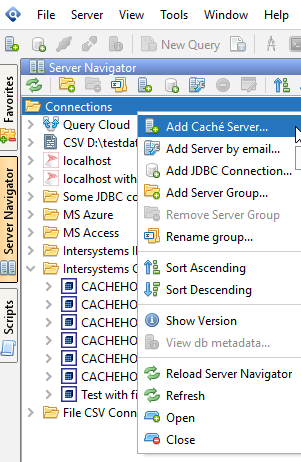
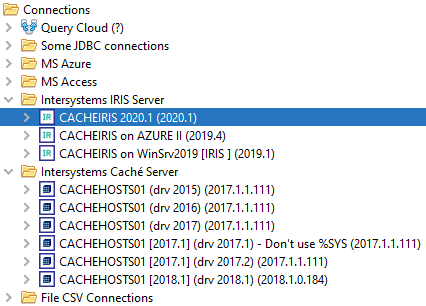
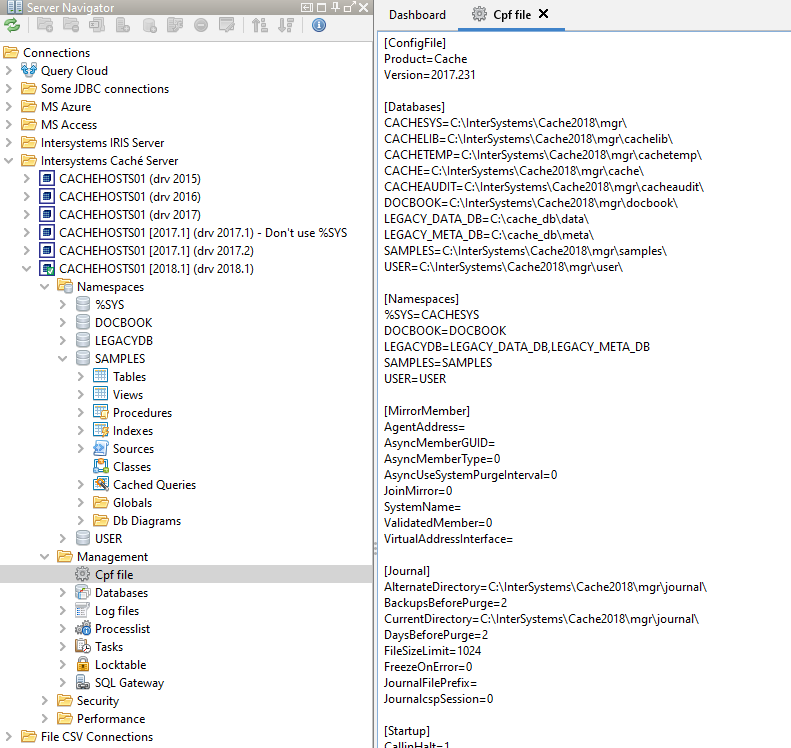
The Server Navigator is a tree structure to browse and manage database objects. You can easily organize and group your Intersystems IRIS and Caché Servers. But you can also integrate connections to other databases, e.g. MS SQL Server, SQLite, H2, HSQLDB, MS Access or just simple CSV Files.
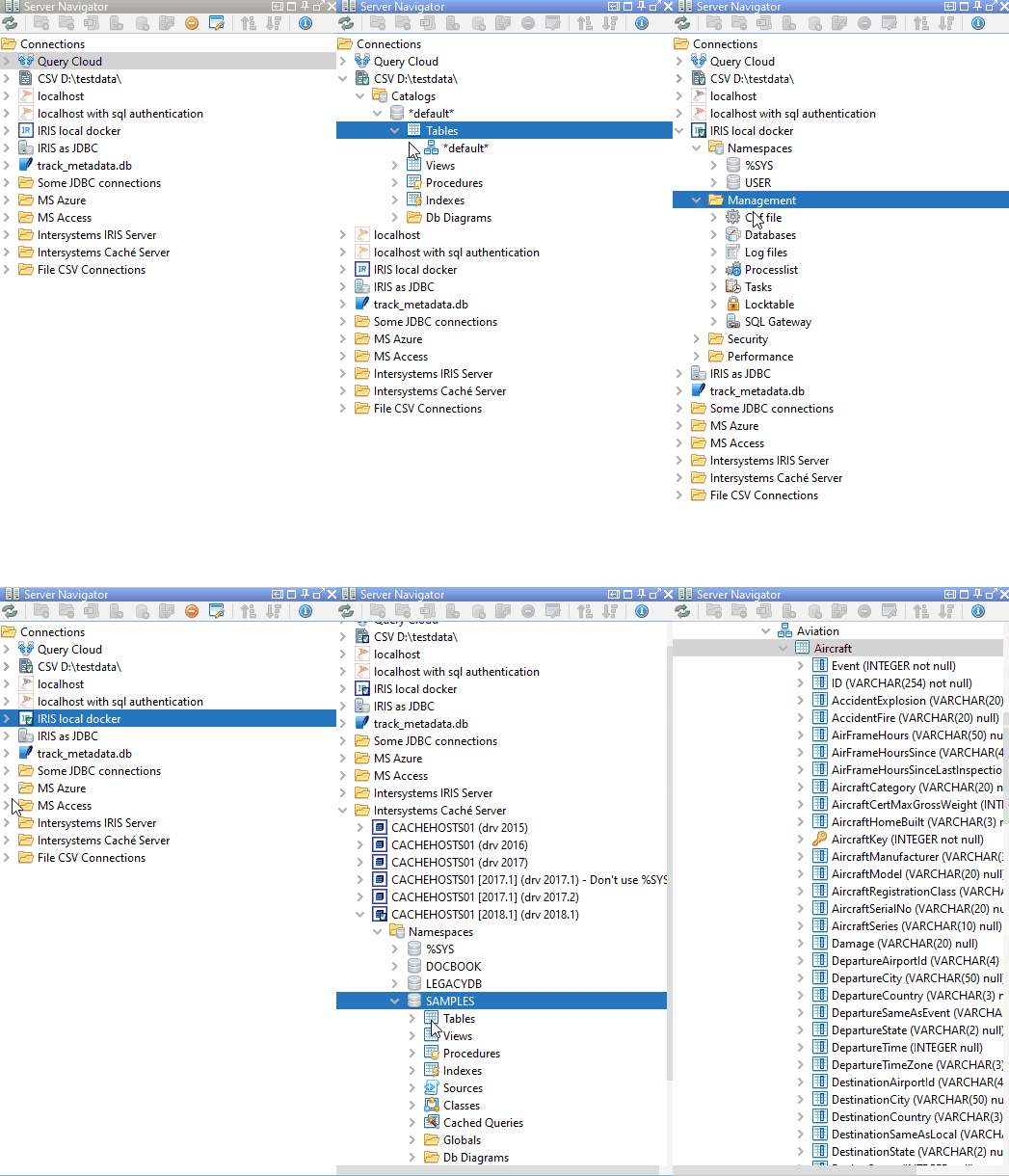
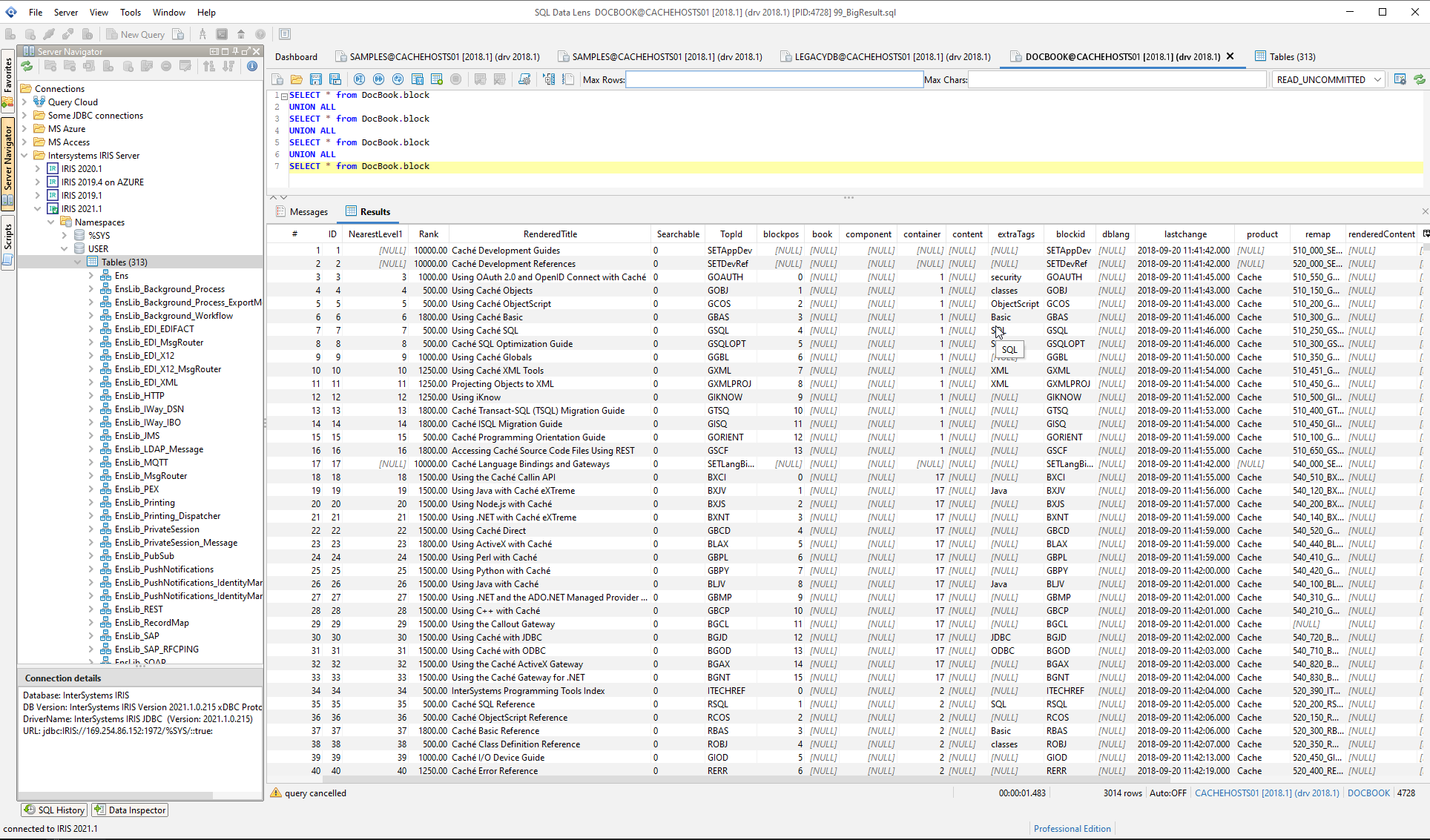
Easily navigate through your intersystems servers and other databases. All Namespaces are listed for easy navigation. No need to know the name of the Namespaces, no need to configure a multitude of JDBC connections:
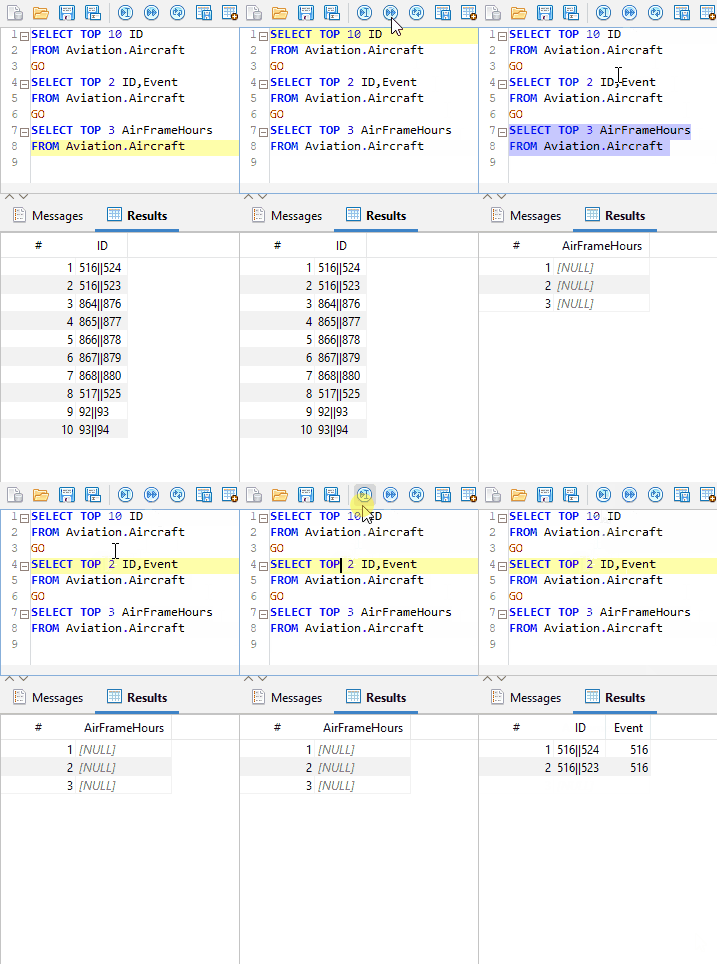
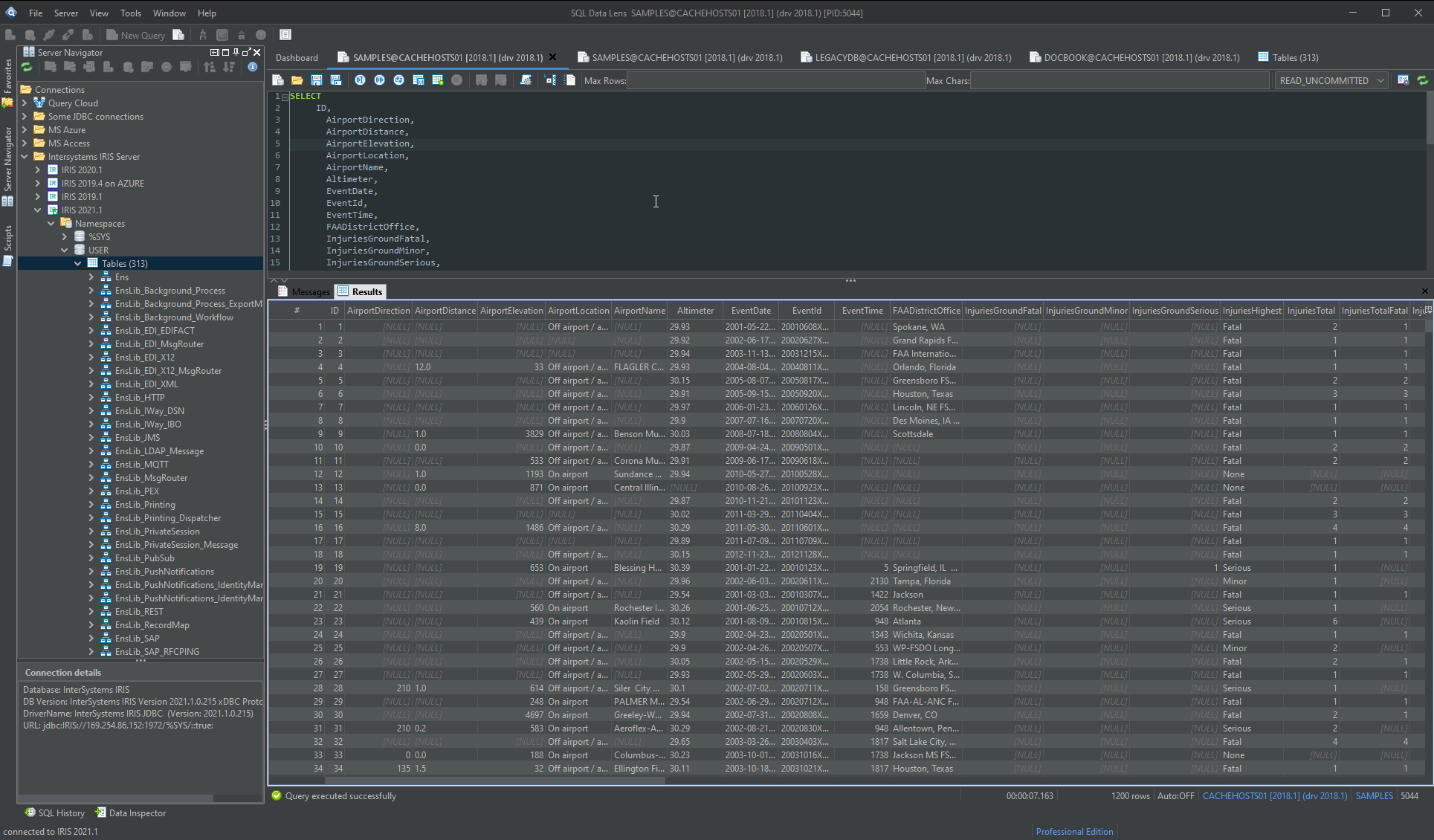
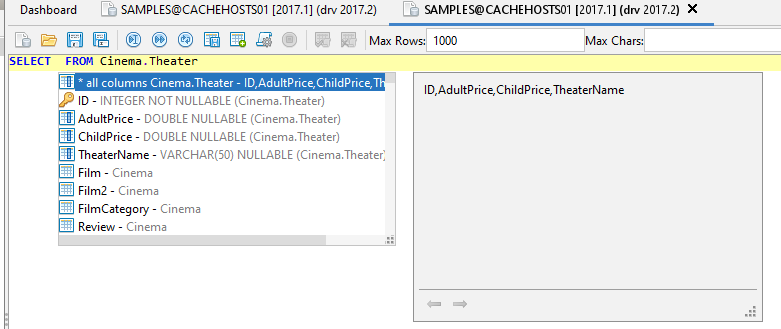
Write and run queries in the advanced SQL editor that speeds up your coding and reduce errors with features such as auto-completion, syntax highlighting, Bracket Matching, Goto Line commands and many more.
SQL DATA LENS automatically detects the next sql statement, just press "Execute next query" or just place the cursor on any statement and press "Execute current query (F5)":
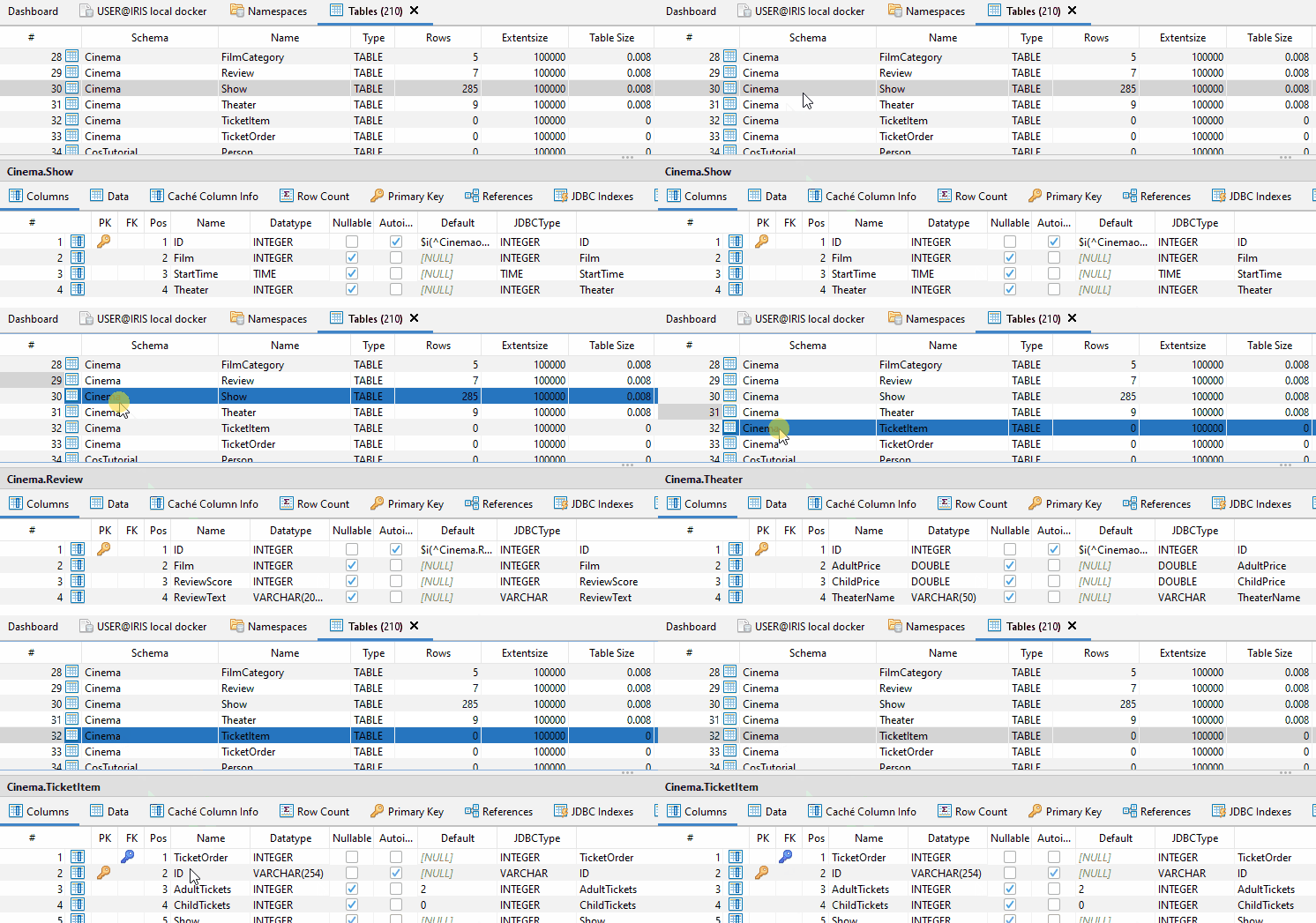
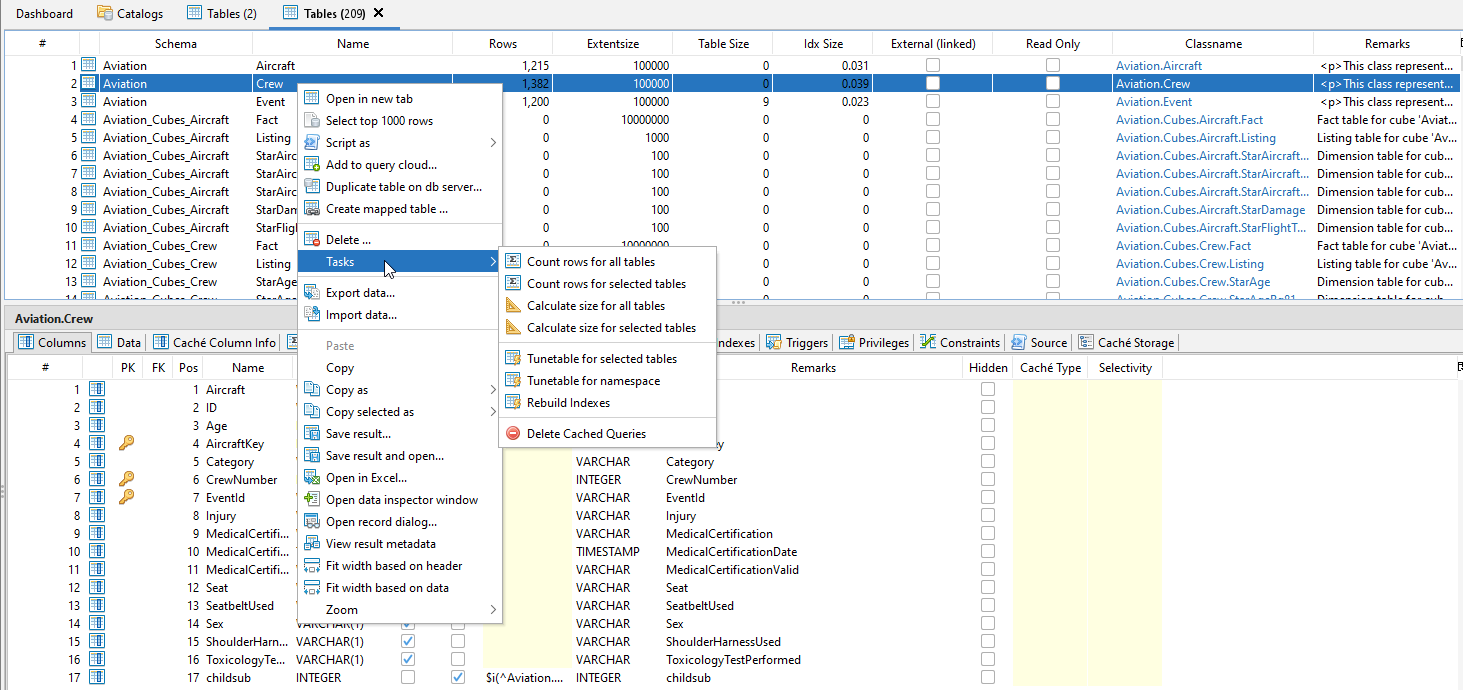
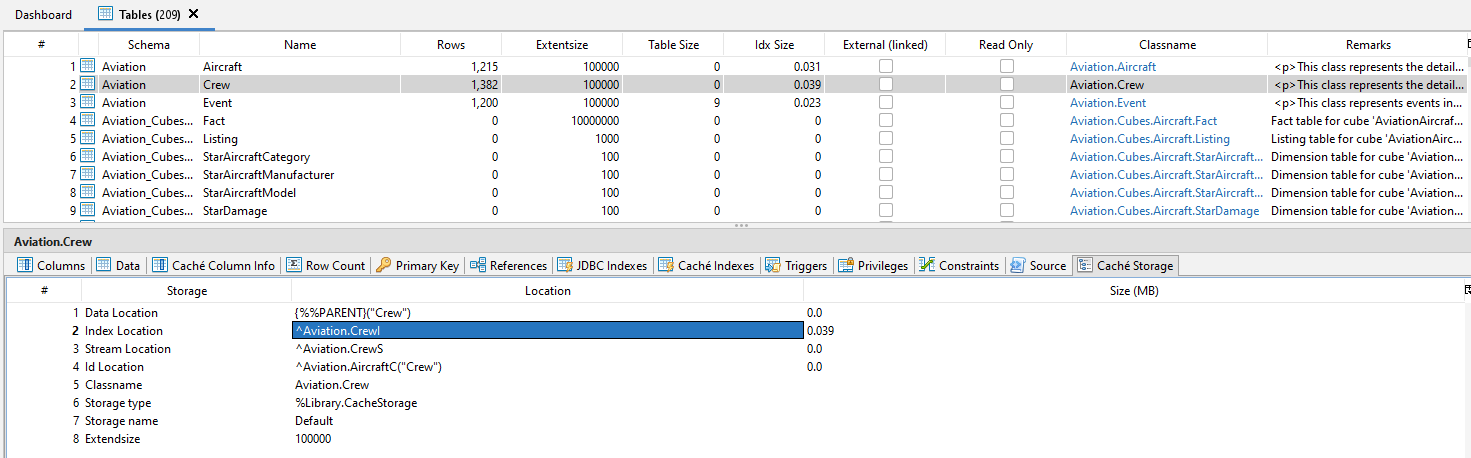
Browse and administer database objects such as tables, procedures, functions, triggers, etc.
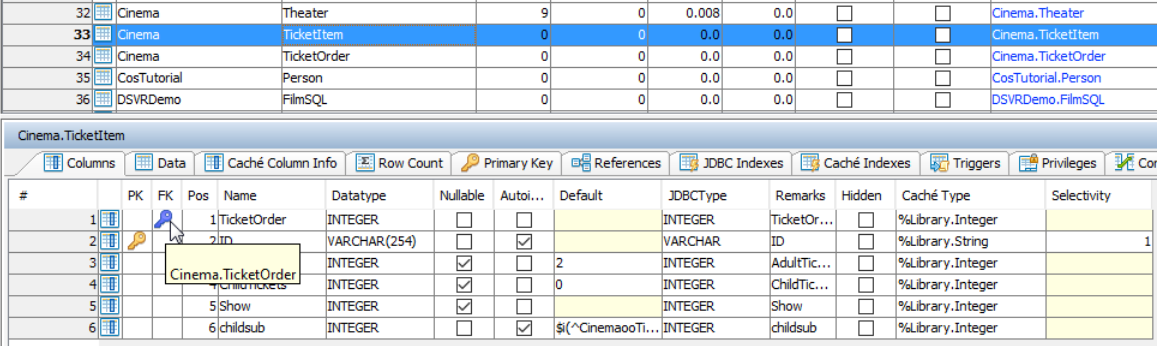
On the Colums detail tab are information about primary-, foreign keys available for all columns in a table. The tooltip on a foreign key icon shows the referenced table.
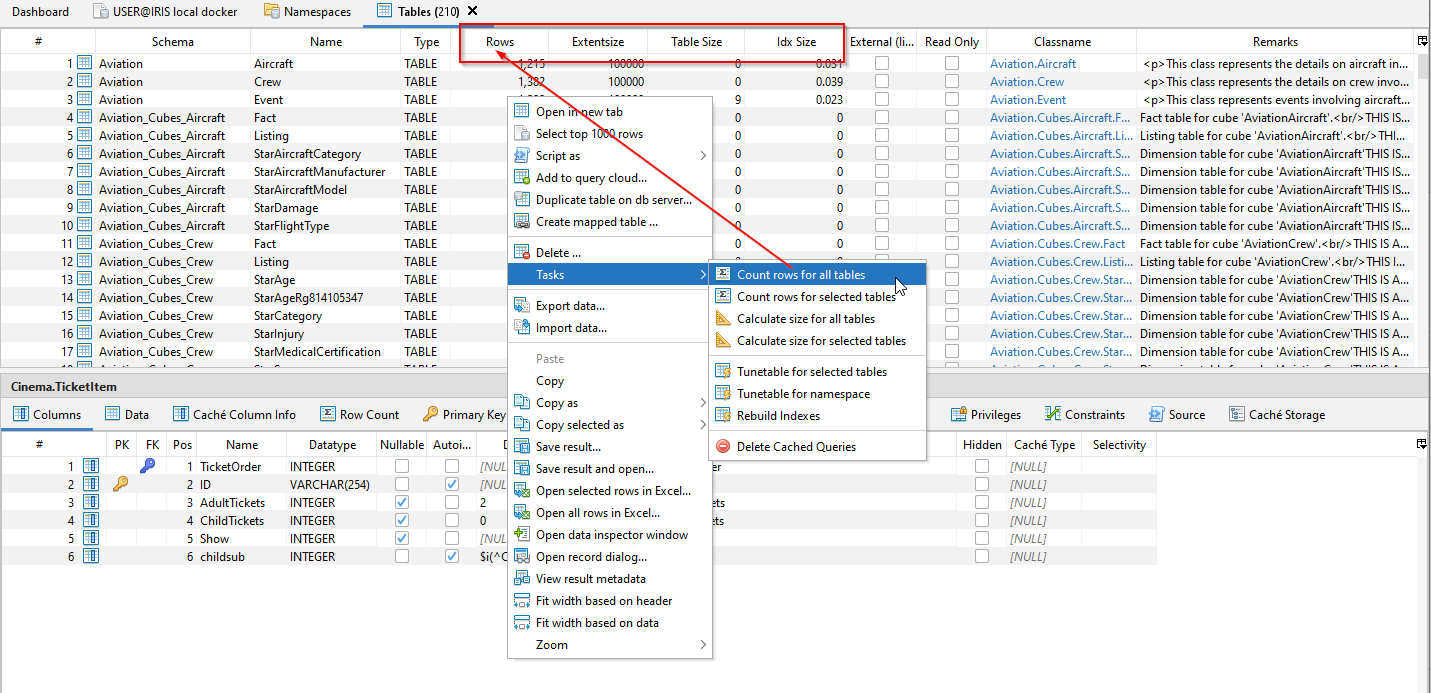
Easy editing, easy filtering simplify the work with your data
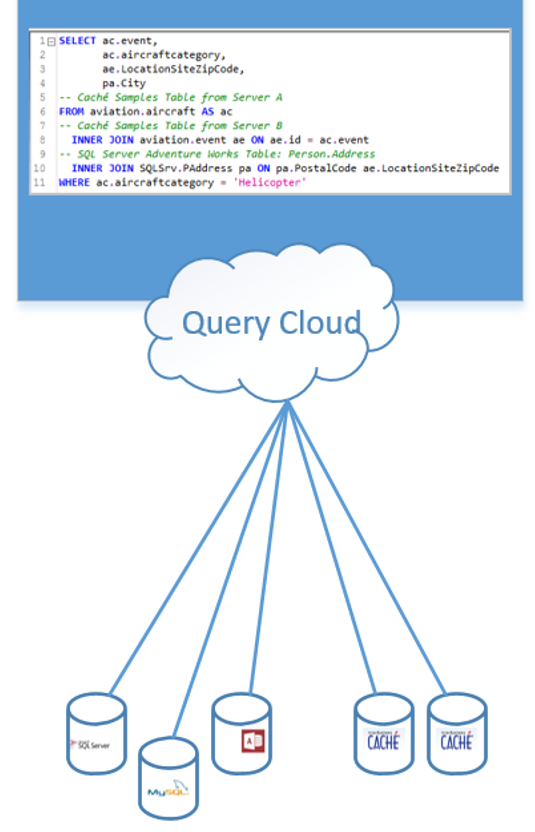
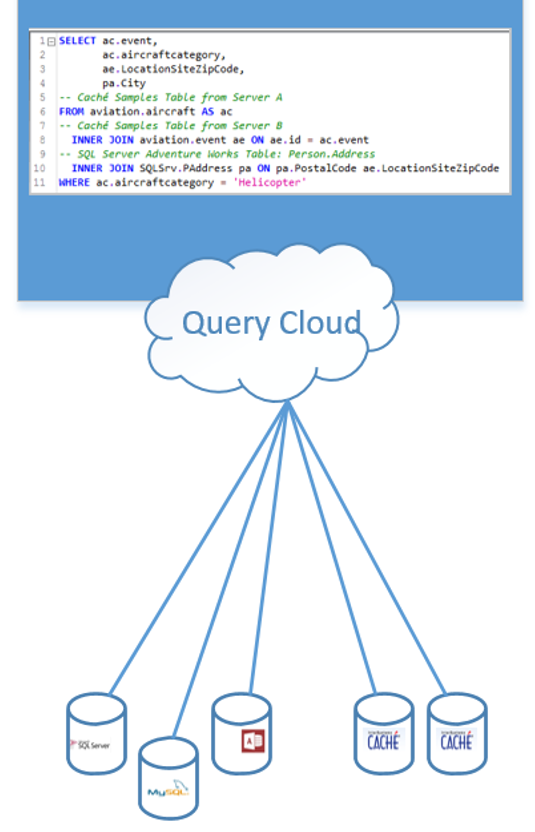
With the feature called Local Query Cloud you can write SQL Statements across multiple Servers, Namespace and combine (SQL JOIN!) this data with other datasources like Microsoft SQL Server; Microsoft Access or simple CSV files. All this with zero installation on server side!
Use the Local-Query-Cloud to access data across server, namespaces and databases in ONE sql statement.
With the feature Session snapshot SQL DATA LENS allows a quick restart. Stopping SQL DATA LENS saves all SQL Editor tabs with content and connection infos. All this will be automatically restored on next start.
Last checked by moderator
02 May, 2026, Works
Version
4.0.204 Sep, 2026
Category
Developer EnvironmentWorks with
InterSystems IRISInterSystems IRIS for HealthHealthShareCachéEnsembleInterSystems IRIS BIFirst published
28 Dec, 2021Last edited
04 Sep, 2026